New Hampshire
New Hampshire long lived in Massachusetts’s shadow. It was ruled for decades by the Wentworth oligarchy until Governor John Wentworth fled after the Battle of Lexington and Concord.
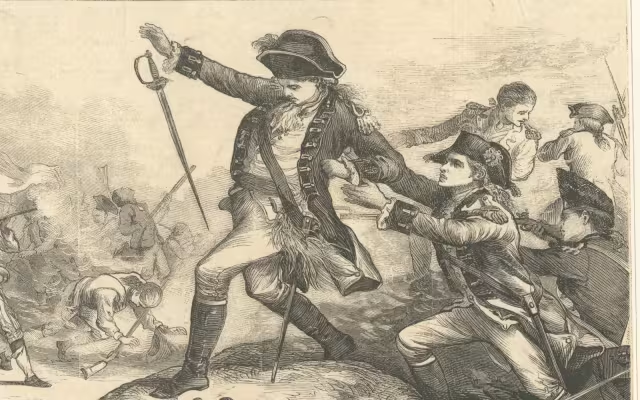
The colony drafted a new state constitution in January 1776, so when the Declaration of Independence arrived in July, it served more as confirmation than revelation. With no fighting on its own soil, many residents stayed uncommitted, and military participation ran lower than in earlier wars—though General John Stark led New Hampshire men to victory at Bennington, coining the phrase “live free or die.”
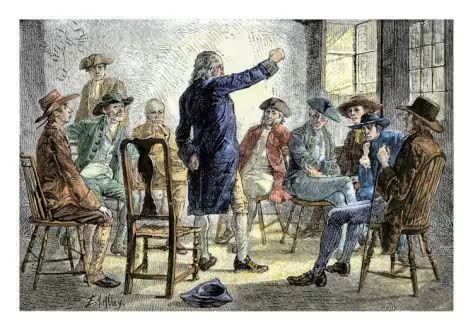
The Revolution reinforced the state’s enduring tradition of town-meeting, consent-of-the-governed democracy. Loyalty often tracked religion, with Anglicans favoring the Crown and the Congregationalist majority the Patriots. The Abenaki nation, the main Indigenous population in New Hampshire, sided with Britain during the Revolutionary War, believing the British to be a more reliable protector than encroaching American settlers.
- New Hampshire
African Americans
- New Hampshire
Loyalists
- New Hampshire
Native Americans
- New Hampshire
Politicians
- New Hampshire
Women