North Carolina | Time Period

Context

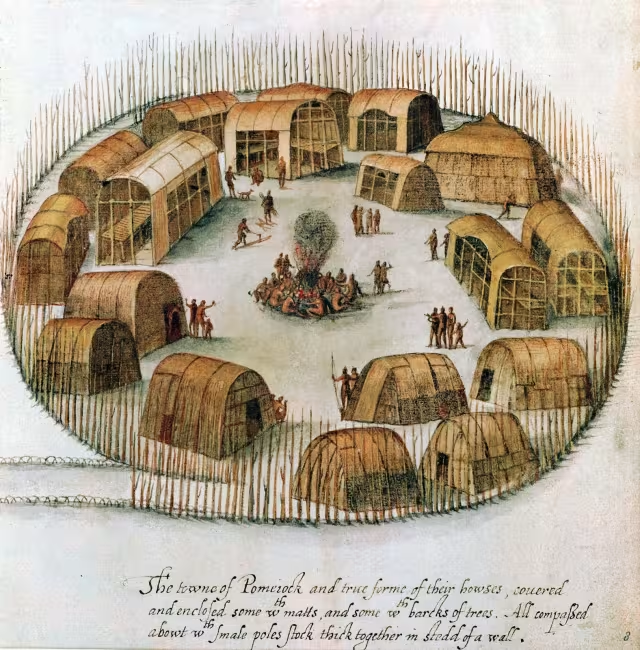
By the 1770s, North Carolina was home to roughly 300,000 people—including some 80,000 enslaved persons—drawn from English, Highland Scots, Scots-Irish, German, and African backgrounds. This land had been home to Native Americans for thousands of years. Geography shaped daily life profoundly: a forbidding coastline of shifting shoals and swamps left few deepwater harbors, slowing trade and communication. Much of the interior, long home to Native peoples, had been settled by small subsistence farmers in the backcountry. These geographic realities bred self-reliance and a longstanding wariness of authority. Originally part of a larger colony, North Carolina separated from South Carolina in 1712 and became a royal colony in 1729. Colonists challenged authority repeatedly, most notably in the Culpeper Rebellion of 1677–78, and that tradition of resistance resurfaced powerfully in the Revolutionary period. The colony's path to independence was marked by several decisive actions: Stamp Act protests by the Sons of Liberty in Wilmington and other areas in 1765; a 1774 non-importation resolution; the Edenton Tea Party of October 1774, when 51 women signed a resolve supporting the boycott of British goods, considered the first organized political action by women in the colonies; and the Halifax Resolves of April 12, 1776, widely regarded as the first official colonial authorization for independence.


Interviewees
  • Sally Bloom
    • Curator of Distance Education, North Carolina Museum of History
More Context

View details
  • Connecticut

    Context

    Considering Independence — Colonial Era

    8:23 Just watched
  • Delaware

    Context

    Considering Independence — Colonial Era

    6:06 Just watched
  • Georgia

    Context

    Considering Independence — Colonial Era

    23:01 Just watched
  • Maryland

    Context

    Considering Independence — Colonial Era

    9:29 Just watched
  • Massachusetts

    Context

    Considering Independence — Colonial Era

    18:34 Just watched
  • New Hampshire

    Context

    Considering Independence — Colonial Era

    26:20 Just watched
  • New Jersey

    Context

    Considering Independence — Colonial Era

    21:48 Just watched
  • New York

    Context

    Considering Independence — Colonial Era

    20:43 Just watched
  • Pennsylvania

    Context

    Considering Independence — Colonial Era

    23:13 Just watched
  • Rhode Island

    Context

    Considering Independence — Colonial Era

    23:52 Just watched
  • South Carolina

    Context

    Considering Independence — Colonial Era

    24:24 Just watched
  • Virginia

    Context

    Considering Independence — Colonial Era

    27:42 Just watched

More from North Carolina

View details
  • North Carolina

    Declaration

    Enacting Independence — 1776

    5:54 Just watched
  • North Carolina

    Memory

    Remembering Independence — 1777 to Present

    12:13 Just watched
  • North Carolina

    African Americans

    4:29 Just watched
  • North Carolina

    Loyalists

    4:56 Just watched
  • North Carolina

    Native Americans

    4:28 Just watched
  • North Carolina

    Politicians

    4:36 Just watched
  • North Carolina

    Women

    5:33 Just watched
0

States of Independence

Produced in partnership with New American History and Thomas Jefferson’s Monticello

© 2026. All Rights Reserved.

  • Videos

    Explore perspectives on the Revolution from historical experts in each of the original thirteen states.

  • Learning Resources

    Browse free learning resources that help you adapt this project to your classroom.


  • About the Project
  • Key Principles

Bookmarks

    No bookmarks yet. Bookmark a video to save it here.